
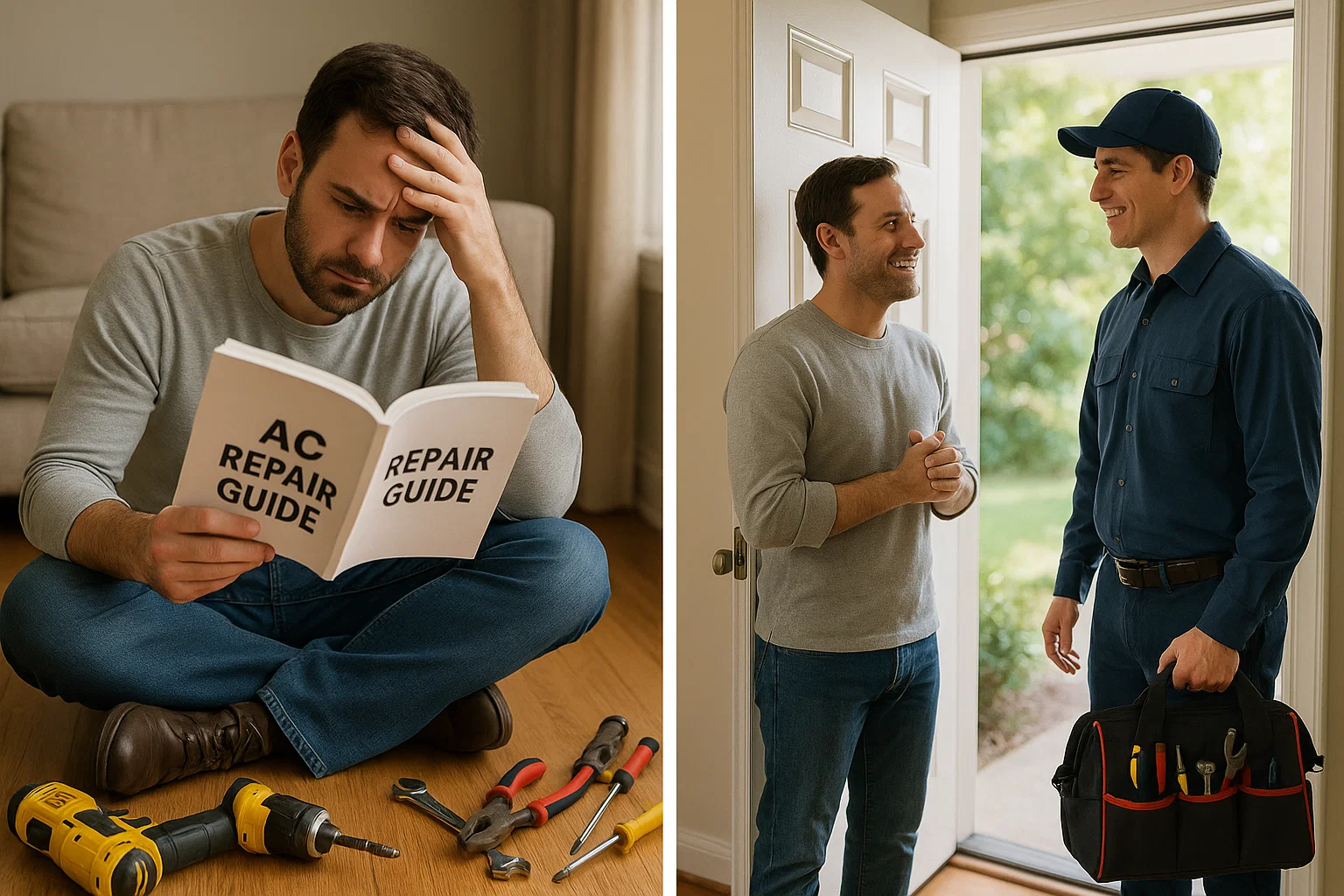
When your air conditioner starts acting up in the middle of a summer heatwave, your first instinct might be to fix it yourself. And while some basic troubleshooting can be helpful, not every AC problem is a safe or smart DIY project.
Knowing the difference between what you can handle on your own and when to call in a professional like those on our team can save you time, money, and frustration—while also protecting your home comfort and safety. Let’s break down what you can do yourself, and when it’s best to bring in the experts.
When Should You Call a Professional for HVAC Repair Service?
Call a professional HVAC service and repair technician if you notice:
- Refrigerant leaks or ice on the coils
- Electrical issues such as tripped breakers or burning smells
- Loud banging, grinding, or persistent unusual noises
- Weak airflow or inconsistent cooling after basic troubleshooting
- System short cycling or failing to turn on
Simple tasks like changing air filters or checking thermostat settings can be done yourself, but complex mechanical or electrical problems require expert diagnosis and safe repair.
Common AC Issues You Can Handle Yourself
There are a few simple AC problems that homeowners can often troubleshoot without needing professional help:
1. Dirty Air Filter
One of the most common causes of poor AC performance is a clogged air filter. A dirty filter restricts airflow, making your system work harder and reducing its efficiency. Replacing or cleaning the filter every 1–3 months is a quick and easy fix. Staying proactive with routine care—like following a seasonal HVAC service and repair checklist—can also help prevent performance issues before they start.
2. Thermostat Problems
If your AC isn’t kicking on, check your thermostat settings. Make sure it’s set to “cool” and the temperature is lower than the current room temperature. Also, replace the batteries if it’s not turning on.
3. Tripped Breaker
Sometimes, a power surge can trip the breaker for your AC system. Check your electrical panel and reset any tripped breakers—but if it keeps happening, that’s a job for a professional.
4. Blocked Vents or Outdoor Unit
Ensure nothing is blocking your indoor vents or outdoor condenser unit. Leaves, dirt, or furniture can obstruct airflow. Clearing away these obstructions can help your AC function better.
When It’s Time to Call a Professional for AC Repair
Some problems go beyond DIY territory and require the expertise, tools, and training of a certified HVAC technician. Here’s when you should leave it to the pros:
1. Refrigerant Leaks
Low refrigerant levels can indicate a leak, which not only harms your system but can also be hazardous to handle without proper certification. A pro is required to safely detect and repair leaks and recharge your system.
2. Electrical Issues
If your AC unit repeatedly trips breakers, doesn’t turn on, or emits burning smells, you could have an electrical problem. These can be dangerous and should never be handled without proper training.
3. Frozen Coils
Frozen evaporator coils can cause your AC to blow warm air or stop working entirely. While you can turn off the unit and let it thaw, a technician will need to identify and resolve the underlying cause.
4. Unusual Noises or Odors
Grinding, banging, hissing, or musty odors can point to failing components, mold, or other serious issues. In some cases, major component failure—such as professional HVAC repair service for compressors—may require professional evaluation. Ignoring these signs can lead to more costly damage over time.
5. System Short Cycling
If your AC turns on and off rapidly, it’s not operating efficiently and may be signaling a deeper problem, like a faulty thermostat or oversized unit. This issue affects energy usage and system longevity.
How Professional AC Repair Protects Your Comfort and System
Your air conditioner is a complex machine, and while there’s no harm in handling basic maintenance, tackling advanced repairs on your own can do more harm than good. If your system is aging or facing frequent breakdowns, it may be worth considering expert HVAC service repair guidance before investing in another major fix. When in doubt, it’s always safer—and smarter—to trust the professionals.
Frequently Asked Questions
Question: How often should I schedule professional AC maintenance to help avoid major repairs?
Answer: Most HVAC experts recommend professional maintenance at least once a year, ideally in spring before cooling season, to catch issues early, clean components, and keep your system efficient and reliable. Regular tune-ups can reduce unexpected breakdowns and extend unit lifespan.
Question: Can attempting DIY repairs affect my air conditioner’s manufacturer warranty?
Answer: Yes. Many manufacturer warranties require that repairs and inspections be done by licensed professionals. DIY fixes that involve internal components or refrigerant handling can void the warranty and leave you responsible for full repair costs.
Question: What safety hazards should I be aware of when working near my AC unit?
Answer: AC systems involve high-voltage electricity, pressurized refrigerants, and moving parts. Without proper training, you risk electrical shock, refrigerant exposure, or injury from rotating fans, so safety precautions and professional help are critical for complex tasks.
Question: How can I choose a qualified HVAC technician for AC repairs?
Answer: Look for licensed, insured technicians with good local reviews, industry certifications, transparent pricing, and clear communication. Ask about experience with your specific system type and whether they offer written estimates and warranties on their work.
Question: What are common signs my AC needs more than simple DIY maintenance?
Answer: Signs include consistently high energy bills, uneven cooling, strange noises or odors, water leaks, and frequent cycling. These often point to deeper issues like refrigerant leaks, electrical faults, or component wear that require professional diagnosis.
Contact ThermAll Heating & Cooling, Inc: We are “Your Home Comfort Hero!”